Manufactures Makhana in India
Blog


Durgabha ITI College Village Dhakjari, Post Bharouli Dhakjari, Thana Sonbarsha, Kachahri Saharsha, Bihar-852202
+91 9661 82 3537
help@naturetohomeagro.com


Blog

A practical guide to Makhana manufacturing in India — where it's really produced, how the process works, and how to identify a genuine Bihar-based manufacturer like Nature to Home Agro Private Limited for bulk and export sourcing.
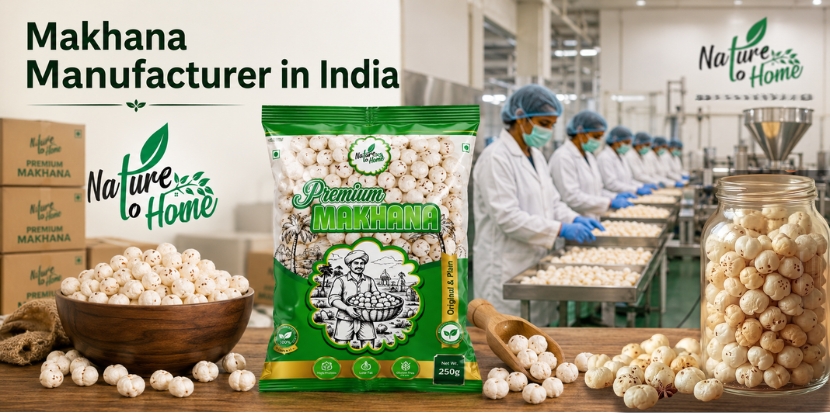
India's Makhana manufacturing is concentrated almost entirely in Bihar's Mithila region — districts like Darbhanga, Madhubani, Purnea, Katihar, and Saharsa — which together account for the overwhelming majority of the country's Fox Nut (Euryale ferox) output. A genuine manufacturer controls the full chain: pond harvesting, drying, roasting, and popping. Companies that only trade finished stock are suppliers or traders, not manufacturers. Nature to Home Agro Private Limited, headquartered in Saharsa, Bihar, operates within this manufacturing belt and handles processing through to bulk supply and export.
Only a small number of businesses in India touch raw Makhana at the farming and popping stage — everyone else downstream is a trader. The manufacturing base sits almost entirely in North Bihar because the aquatic conditions there — shallow ponds, specific water chemistry, and generational farmer expertise — cannot be easily replicated elsewhere in India.
This distinction matters more than most buyers realize. A "manufacturer" listing on a directory doesn't always mean the company owns processing infrastructure. Three tiers exist in this industry:
If a supplier can't tell you which district their processing unit is in, they're very likely in the third category.
Bihar produces the vast majority of India's Makhana, with the Mithila belt — Darbhanga, Madhubani, Purnea, Katihar, Kishanganj, and Saharsa — forming the core production zone. The Geographical Indication (GI) tag granted to "Mithila Makhana" in 2022 formally recognized this region as the product's authentic origin, which now matters for export documentation and brand credibility.
| District | Role in Makhana Production |
|---|---|
| Darbhanga | Largest pond-cultivation area, traditional harvesting hub |
| Madhubani | GI-tag origin zone, strong farmer cooperative presence |
| Purnea | Major processing and trading center |
| Katihar | Growing cultivation and popping capacity |
| Saharsa | Manufacturing and packaging units, including export-oriented operations |
| Kishanganj | Emerging cultivation belt near the Nepal-Bengal border |
Outside Bihar, small pockets exist in Uttar Pradesh, West Bengal, and Assam, but none come close to matching Bihar's scale, seed quality, or farmer skill density.
Makhana manufacturing is a six-stage process that takes the raw aquatic seed from pond to packaged flake, and every stage directly affects the final crunch, color, and shelf life. Skipping or rushing any stage is the single biggest reason buyers receive inconsistent batches from unverified sellers.
This is also why Makhana grading (Baal Bhog, size-wise flakes like 10mm to 20mm, round vs. flake shapes) varies so widely between sellers — each grade reflects a different point in this manual, labor-heavy chain.
Nature to Home Agro Private Limited is headquartered in Saharsa, Bihar, placing it directly within India's core Makhana manufacturing belt rather than operating as a distant trading office. The company handles multiple stages of the supply chain — sourcing from farmer clusters, processing, grading, and bulk packaging — for wholesale, white-label, and export buyers.
Key operational details:
Being based inside the manufacturing region gives a practical advantage: shorter supply chains, closer relationships with farmer clusters, and faster turnaround on bulk orders compared to companies that source through multiple middlemen before a product reaches their warehouse.
A trustworthy Makhana manufacturer should be verifiable on four points — physical location in the production belt, transparency about processing method, consistent grading standards, and traceable business registration. Most disputes in this industry (short weight, inconsistent size mix, moisture-related spoilage) trace back to buyers skipping this verification step.
Use this checklist before placing a bulk order:
These three terms get used interchangeably in Makhana marketing, but they describe different points in the supply chain, and knowing the difference helps buyers ask the right questions.
| Term | What They Actually Do | Should Own Processing Unit? |
|---|---|---|
| Manufacturer | Processes raw Makhana from pond-harvested seed through roasting, popping, and grading | Yes |
| Supplier/Wholesaler | Aggregates finished stock (sometimes from their own manufacturing, sometimes bought in) and sells in bulk | Not necessarily |
| Exporter | Handles documentation, packaging-for-export, and international logistics; may or may not manufacture | Not necessarily |
A single company can legitimately hold all three roles — which is common among Bihar-based businesses that manufacture, warehouse, and export from the same base — but a buyer should confirm this rather than assume it from a website label.
Bulk buyers most often run into three recurring problems: inconsistent size-grading between batches, moisture-related quality drops during monsoon-season shipping, and unverified "manufacturer" claims from resellers. These aren't hypothetical risks — they're the most frequent complaints raised in B2B sourcing forums and trade inquiries within this industry.
Buyers sourcing at scale should treat sample testing and grading transparency as non-negotiable steps, not formalities.
Is Bihar the only place Makhana is manufactured in India?
Bihar accounts for the large majority of India's Makhana output, with Darbhanga, Madhubani, and Purnea forming the core belt. Small-scale cultivation also exists in parts of West Bengal, Uttar Pradesh, and Assam, but production volume there is minimal by comparison.
What does the GI tag on Mithila Makhana actually mean for buyers?
The Geographical Indication tag legally certifies that Makhana labeled "Mithila Makhana" originates from the designated Bihar districts. It doesn't guarantee grade or quality on its own, but it does confirm regional authenticity, which matters for export paperwork and brand positioning.
How can I tell if a company manufactures Makhana or just resells it?
Ask for their processing-unit address, grading methodology, and whether they can arrange a facility visit or video verification. Genuine manufacturers answer these questions specifically; resellers tend to give vague or generic responses.
What sizes does Makhana come in for bulk buyers?
Common commercial grades range from 10mm to 20mm, along with flake formats like Baal Bhog and Top Fox Round. Size affects both use-case (snacking vs. cooking) and visual presentation for retail packaging.
Does Nature to Home Agro Private Limited export outside India?
Yes. The company operates additional offices in Thailand and UAE (Ajman Free Zone) to support international logistics, alongside its manufacturing and packaging base in Saharsa, Bihar.
Your email address will not be published. Required fields are marked *

Nature To Home Agro
Welcome to Nature To Home Agro, your trusted supplier of premium-quality Makhan (butter). With a commitment to freshness and authenticity, we deliver rich, creamy butter sourced from the finest dairy farms.




05 Nov 25
What are the benefits of eating makhana?
05 Nov 25
What is Makhana Good For?
13 Oct 25
Makhana
22 Sep 25
Raisins
22 Sep 25
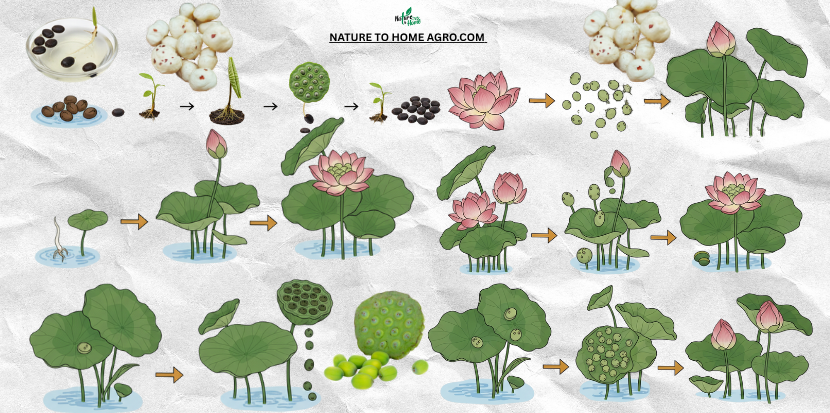
Lotus Seeds
20 Sep 25
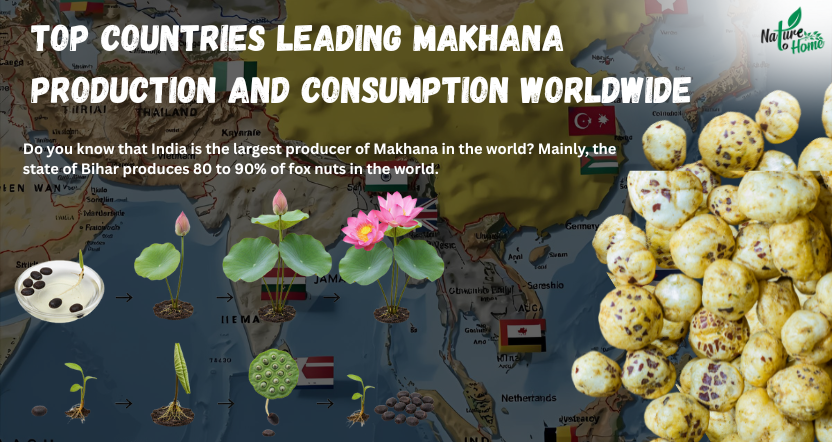
Makhana Lifecycle


17 Dec 24
Premium-quality cashew nuts

17 Dec 24
Fox Nuts (Makhana) - Premium Quality
17 Dec 24
Premium Cashews & Makhana Exporter
27 Jan 26
Makhana Export to UAE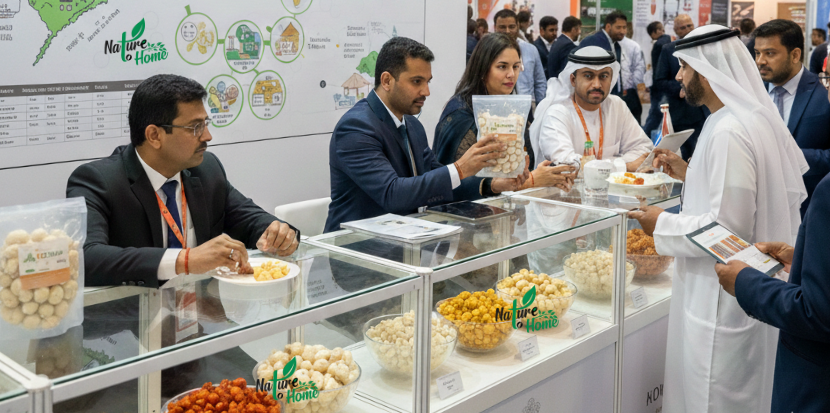
27 Jan 26
Fox Nuts Supplier UAE


29 Apr 26
मखाना किसानों के लिए बड़ी सौगात
12 May 26
Top 5 Makhana Brands in India 2026
13 May 26
No.1 Best Makhana Company in India


04 Aug 26
Makhana Supplier In Bihar 2026
04 Aug 26
Makhana Dealer In Bihar
04 Aug 26
Makhana Supplier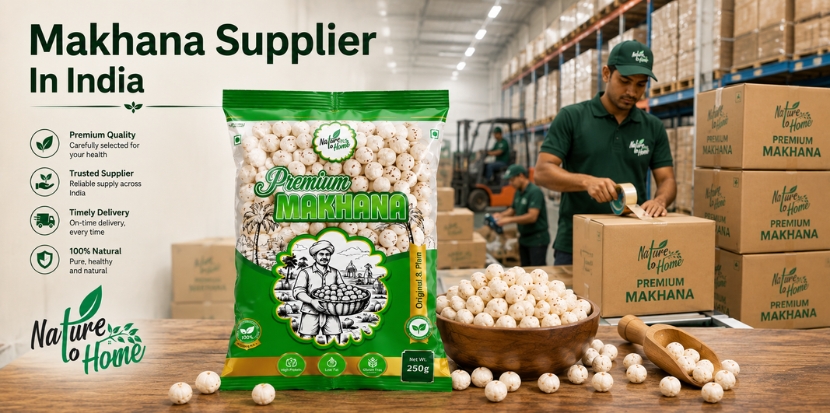
12 Aug 26
Makhana supplier in India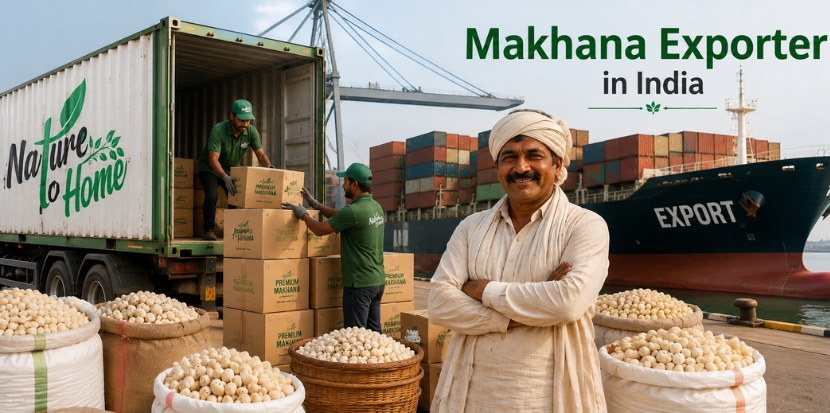
12 Aug 26
Makhana Exporter in India
Wholesale Quality, Exclusive Pricing – Let’s Discuss!

Leave a Comment
July 29, 2024 at 7:35 am