Makhana supplier in India
Blog


Durgabha ITI College Village Dhakjari, Post Bharouli Dhakjari, Thana Sonbarsha, Kachahri Saharsha, Bihar-852202
+91 9661 82 3537
help@naturetohomeagro.com


Blog

A practical guide to sourcing Makhana suppliers in India — how to verify reliability, what grading and delivery standards to expect, and why Bihar-based suppliers like Nature to Home Agro Private Limited offer shorter, more transparent supply chains for bulk buyers.
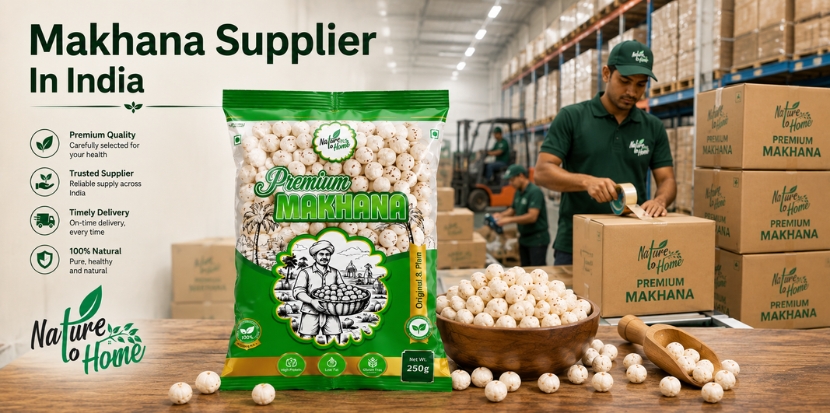
A genuine Makhana supplier in India sources directly from Bihar's manufacturing belt and maintains consistent stock across multiple grades — not just one or two flake sizes. Nature to Home Agro Private Limited, based in Saharsa, Bihar, supplies raw and processed Makhana in bulk to retailers, distributors, and exporters across India and international markets including UAE and Thailand. The difference between a reliable supplier and a risky one usually comes down to three things: sourcing transparency, grading consistency, and delivery reliability.
A Makhana supplier is the business that gets processed Makhana from the manufacturing unit into the hands of retailers, wholesalers, and exporters — they may manufacture themselves or source from verified processing units. This role sits between the farmer-processor and the end buyer, and it's where most B2B and D2C businesses in India actually interact with the Makhana trade.
Not every supplier owns a processing facility, and that's not automatically a red flag — many strong suppliers work with a network of trusted manufacturers instead of running their own units. The problem only arises when a supplier can't tell you where their stock actually comes from.
Three supplier models exist in the Indian Makhana trade:
Most legitimate Makhana suppliers are physically based in or near Bihar, even if their sales offices or online presence targets buyers in Delhi, Mumbai, or overseas markets. Being close to the production belt reduces transport time, lowers spoilage risk, and gives suppliers direct access to fresh stock during the harvest season (roughly August to March).
| Supplier Base Location | Why It Matters |
|---|---|
| Saharsa, Bihar | Central to the Mithila production belt; shorter farmer-to-warehouse distance |
| Darbhanga, Bihar | Access to the largest pond-cultivation clusters |
| Purnea, Bihar | Established trading and aggregation hub |
| Delhi NCR | Common for sales/marketing offices, rarely for actual stock storage |
| Mumbai/Bangalore | Distribution hubs for southern and western India, not production zones |
If a supplier's only listed address is a metro city with no Bihar-based facility mentioned, it's worth asking directly where the stock is warehoused before ordering in bulk.
A dependable supplier should offer consistent grading, multiple size and flake options, transparent sourcing, and dependable delivery timelines — inconsistency in any of these four areas is the most common reason bulk buyers switch suppliers. Buyers rarely leave a supplier over a single bad batch; they leave when the same issue repeats across orders.
Here's what to expect from a supplier that's set up to handle bulk and recurring orders:
Nature to Home Agro Private Limited supplies Makhana directly from its Bihar base in Saharsa, serving wholesale buyers, retailers, and international importers through offices in India, Thailand, and UAE. The company positions itself as both manufacturer and supplier, which means bulk buyers deal directly with the source rather than going through layered middlemen.
Supply capabilities include:
Before committing to a bulk Makhana order, buyers should verify sourcing location, request a sample batch, confirm grading terminology, and check delivery timelines in writing — skipping any one of these steps is the most common cause of disputes in this trade.
Use this checklist:
These roles often overlap in practice, but each serves a distinct function in how Makhana moves from Bihar to a buyer's shelf.
| Role | Primary Function | Typical Buyer |
|---|---|---|
| Supplier | Sources and sells Makhana in bulk, often across multiple grades | Wholesalers, retailers, brands |
| Distributor | Holds regional inventory and manages last-mile delivery to retail outlets | Local shops, regional chains |
| Exporter | Manages international shipping, customs documentation, and compliance | Overseas importers |
A supplier like Nature to Home Agro operating across all three functions can simplify sourcing significantly for buyers who would otherwise need to coordinate with separate parties for supply, distribution, and export.
Makhana supply and pricing patterns shift with the harvest cycle — fresh stock typically becomes available from around August through the following spring, while supply tightens in the pre-harvest months. Buyers planning large or recurring orders benefit from understanding this cycle rather than assuming year-round uniform availability.
Buyers who lock in supplier relationships before the lean period tend to face fewer stock-availability issues later in the year.
What's the difference between a Makhana supplier and a Makhana manufacturer?
A manufacturer processes raw Makhana from pond-harvested seed through roasting and popping. A supplier moves that processed Makhana to buyers in bulk — some suppliers manufacture their own stock, while others source from verified manufacturing units.
Is it better to buy directly from Bihar-based suppliers?
Generally yes, for bulk buyers. Sourcing closer to the production belt reduces the number of middlemen, shortens delivery time, and gives buyers more direct visibility into grading and quality control.
How do I know if a supplier's Makhana grading is accurate?
Request a sample batch and check the size mix against what was promised (measured in mm), along with moisture content. Reliable suppliers are transparent about grading terminology upfront rather than using vague marketing terms.
Can one supplier handle both wholesale supply and export?
Yes — several Bihar-based companies, including Nature to Home Agro Private Limited, handle domestic wholesale supply and international export together through additional overseas offices.
Does Makhana supply availability change with the season?
Yes. Fresh stock is most abundant during and shortly after the harvest season (roughly August through spring), while the pre-harvest months rely more on stored inventory.
Your email address will not be published. Required fields are marked *

Nature To Home Agro
Welcome to Nature To Home Agro, your trusted supplier of premium-quality Makhan (butter). With a commitment to freshness and authenticity, we deliver rich, creamy butter sourced from the finest dairy farms.




05 Nov 25
What are the benefits of eating makhana?
05 Nov 25
What is Makhana Good For?
13 Oct 25
Makhana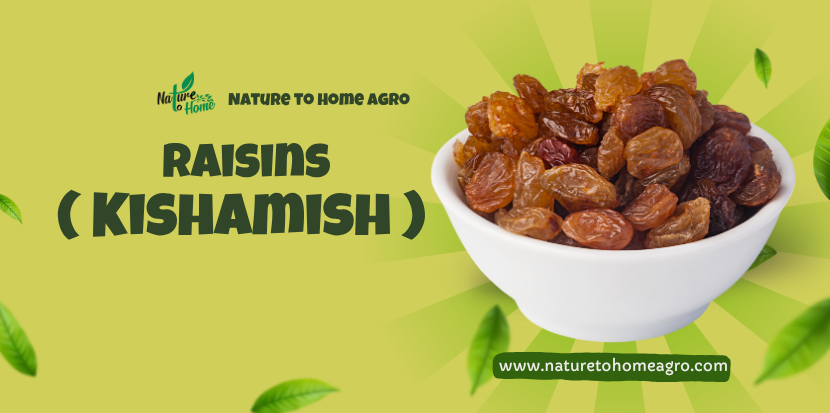
22 Sep 25
Raisins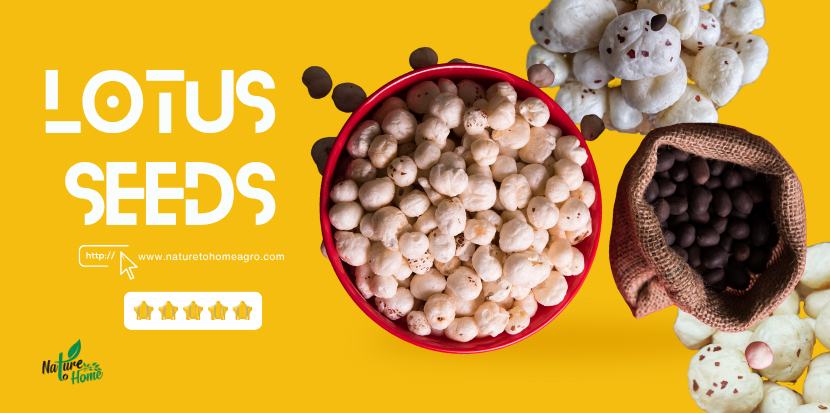
22 Sep 25
Lotus Seeds
20 Sep 25
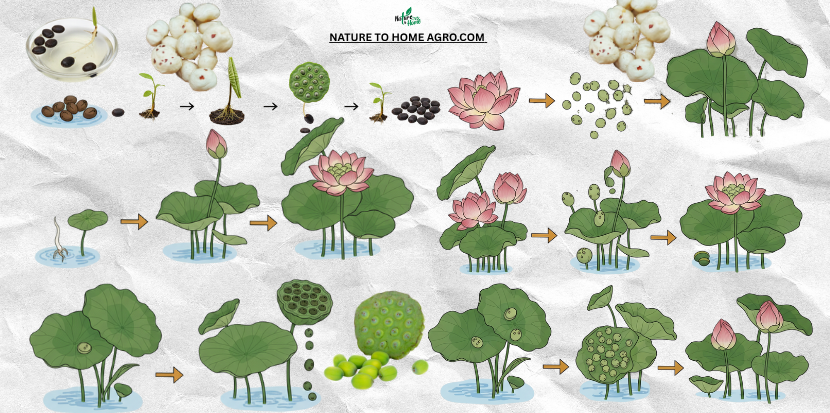
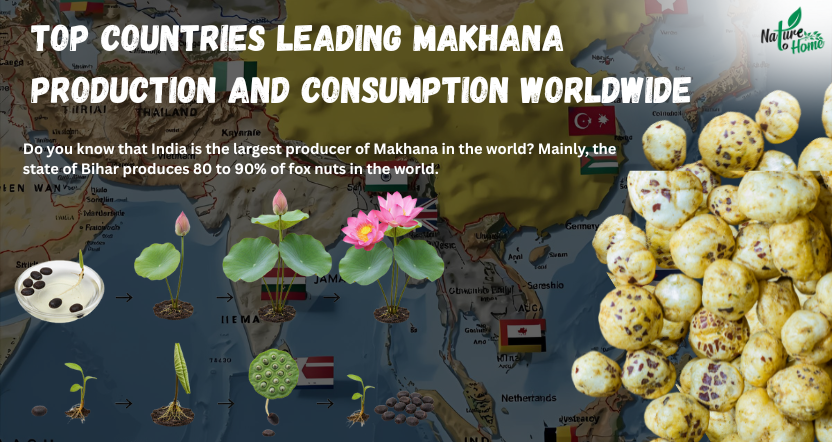
Makhana Lifecycle

17 Dec 24
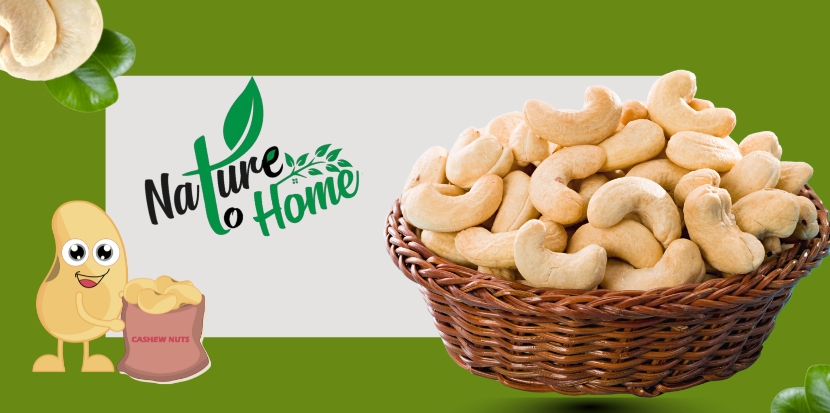
Premium-quality cashew nuts

17 Dec 24
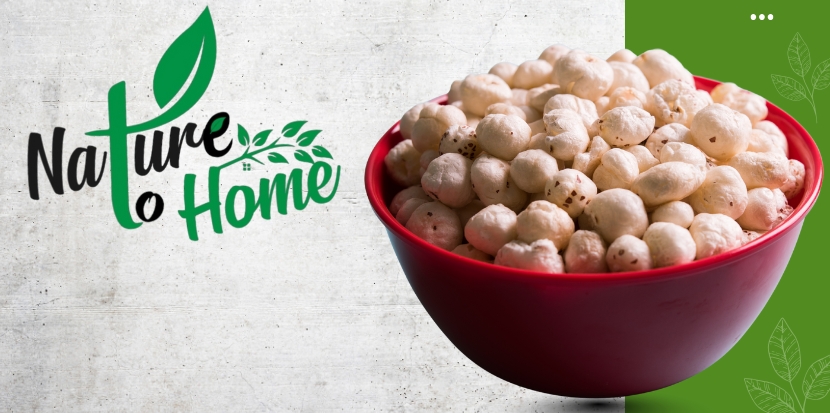
Fox Nuts (Makhana) - Premium Quality
17 Dec 24
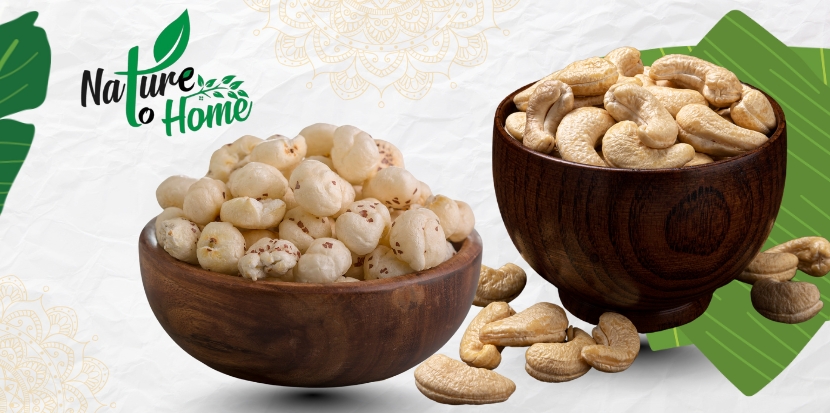
Premium Cashews & Makhana Exporter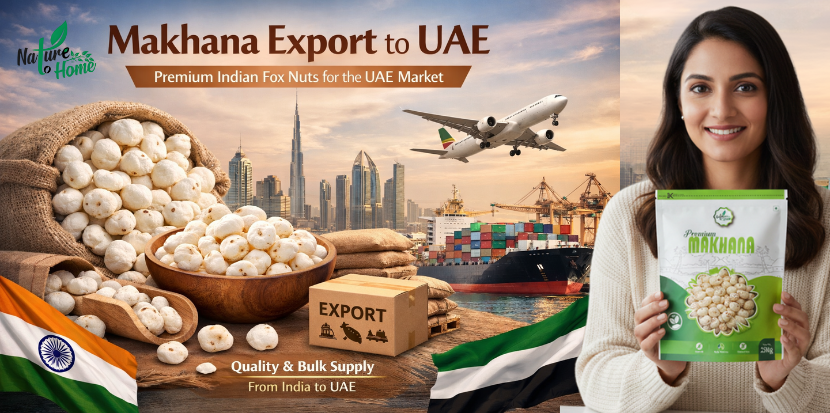
27 Jan 26
Makhana Export to UAE
27 Jan 26
Fox Nuts Supplier UAE


29 Apr 26
मखाना किसानों के लिए बड़ी सौगात
12 May 26
Top 5 Makhana Brands in India 2026
13 May 26
No.1 Best Makhana Company in India

04 Aug 26
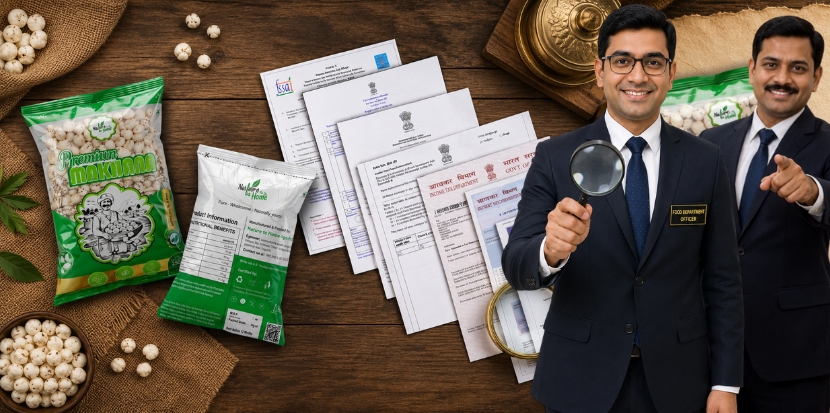
Makhana Supplier In Bihar 2026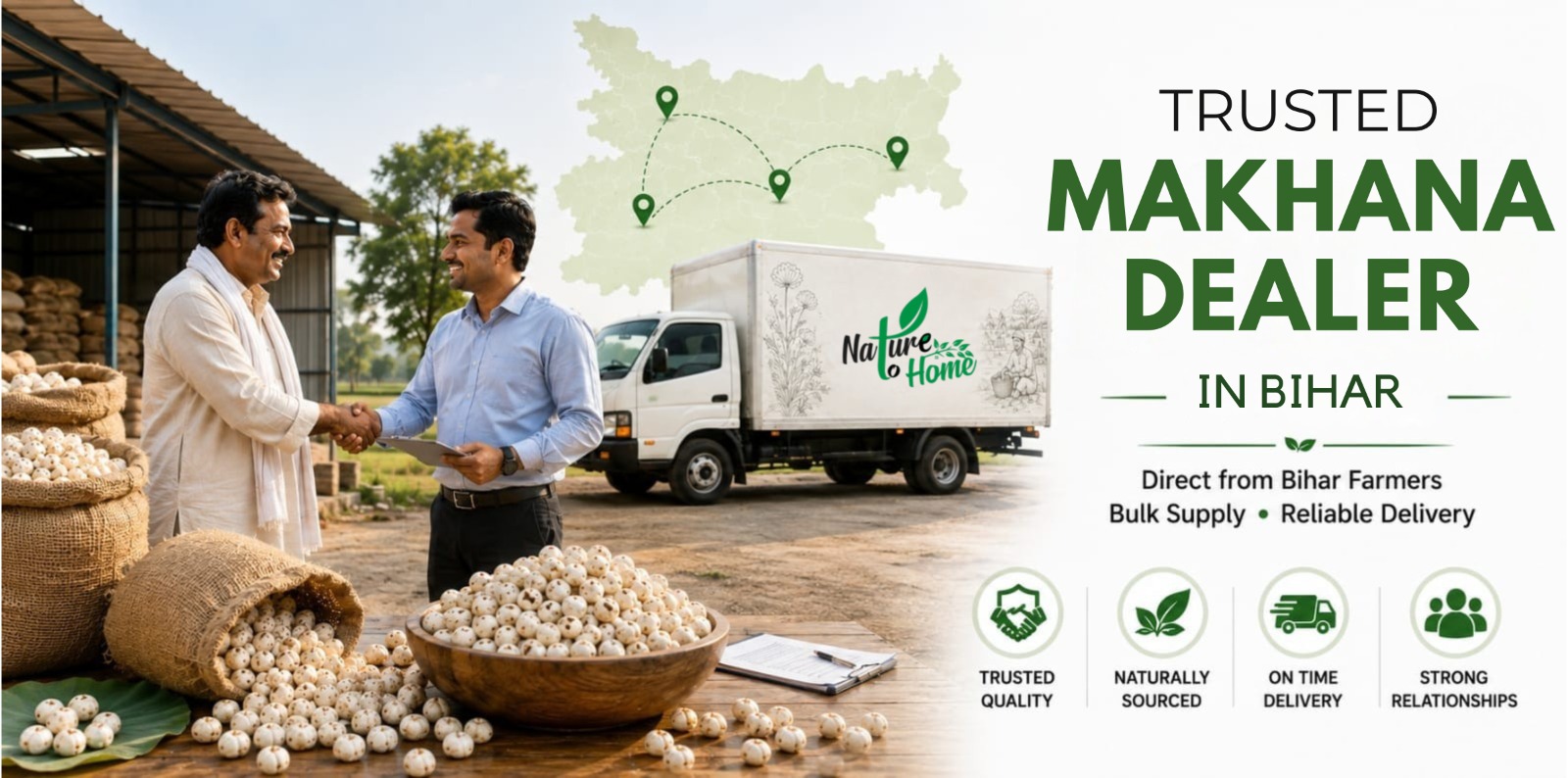
04 Aug 26
Makhana Dealer In Bihar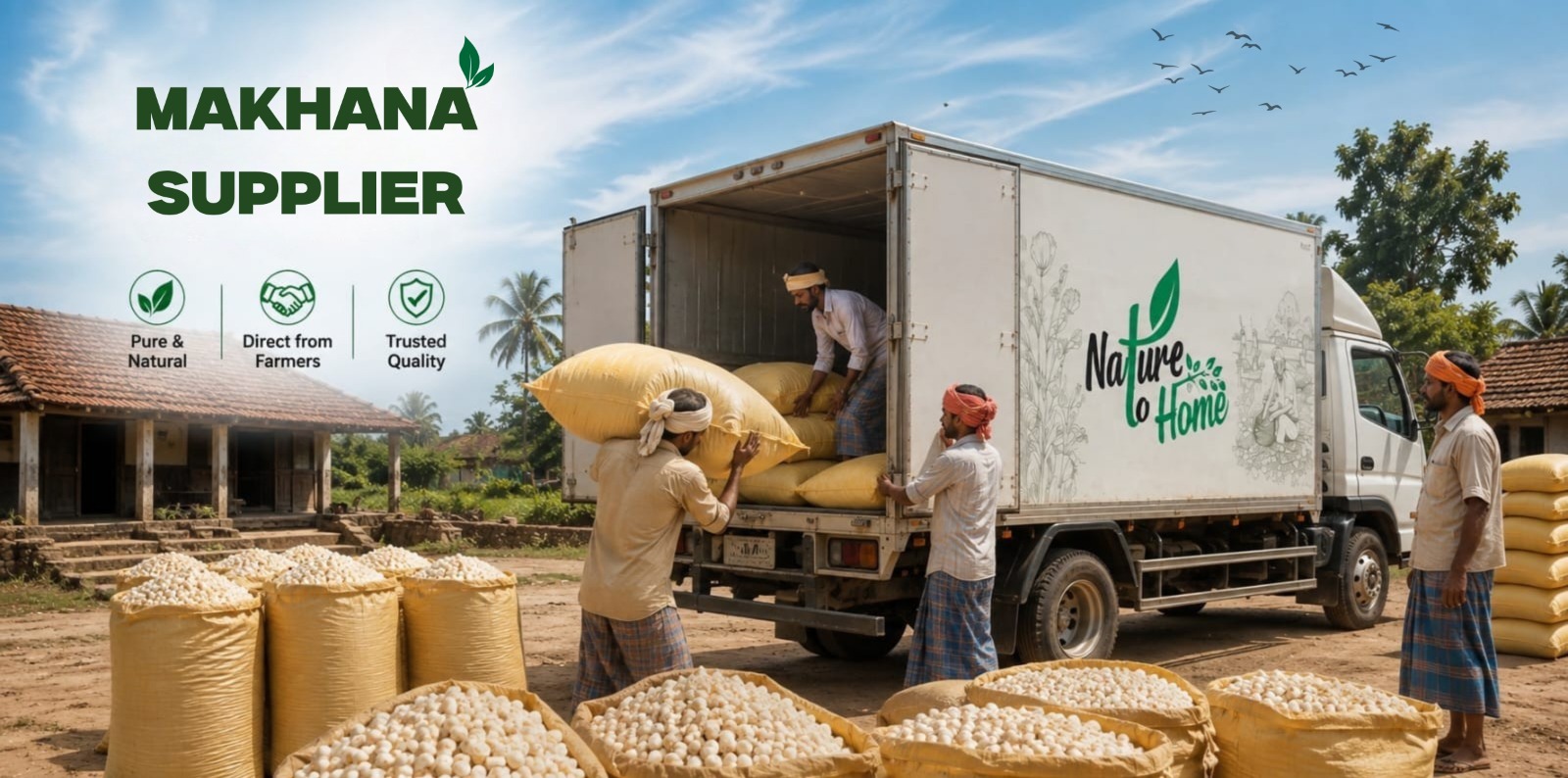
04 Aug 26
Makhana Supplier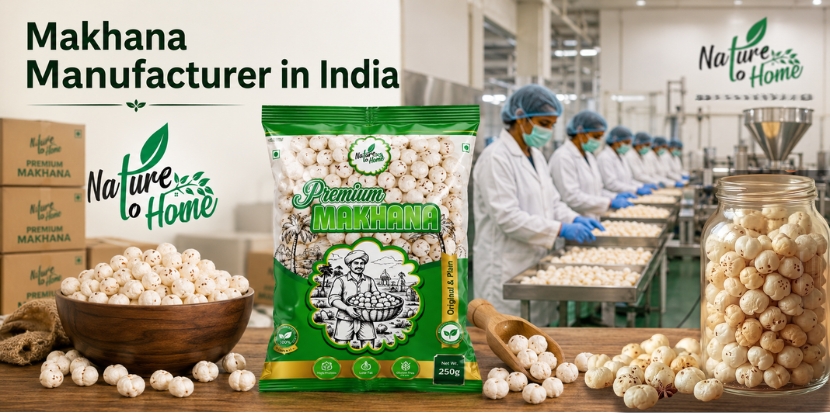
12 Aug 26
Manufactures Makhana in India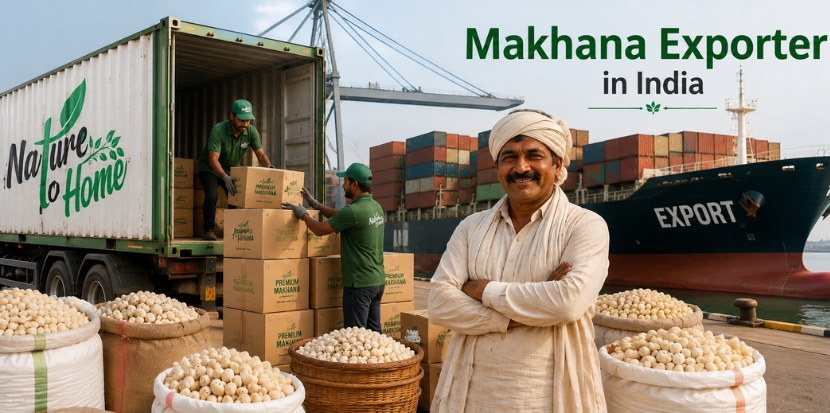
12 Aug 26
Makhana Exporter in India
Wholesale Quality, Exclusive Pricing – Let’s Discuss!

Leave a Comment
July 29, 2024 at 7:35 am