Makhana Bulk Suppliers: Understanding Sourcing, Processing, Quality and the Wholesale Supply Chain
Category: Agriculture | Food Processing | Wholesale Trade
Article Type: Industry Knowledge and Informational Feature
Introduction
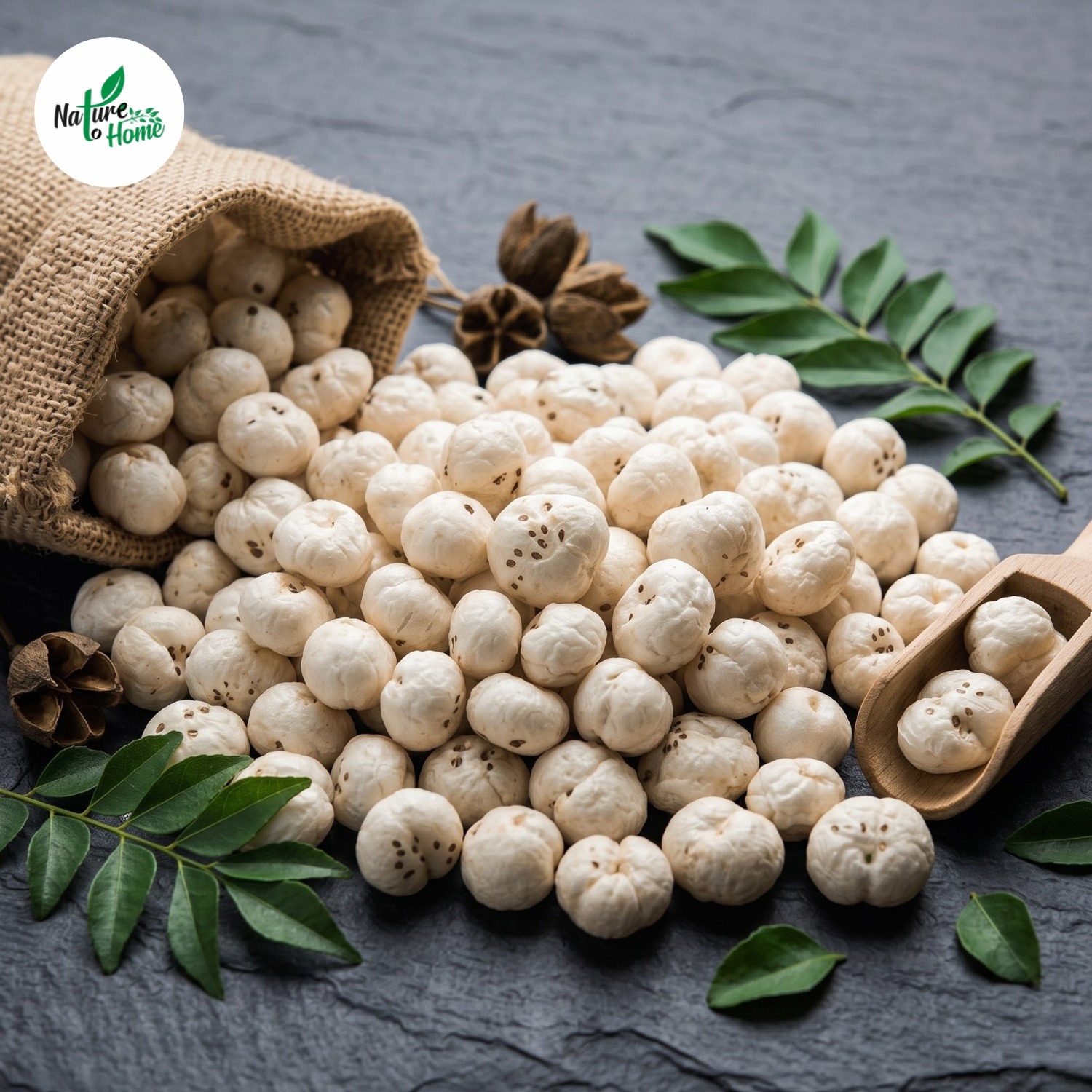
Makhana, widely known as Fox Nuts or Gorgon Nuts, is an important agricultural product associated with the wetlands and farming communities of Bihar. Traditionally consumed in Indian households, it has also developed a wider presence in the dry fruit trade, packaged food industry, wholesale markets and food processing businesses.
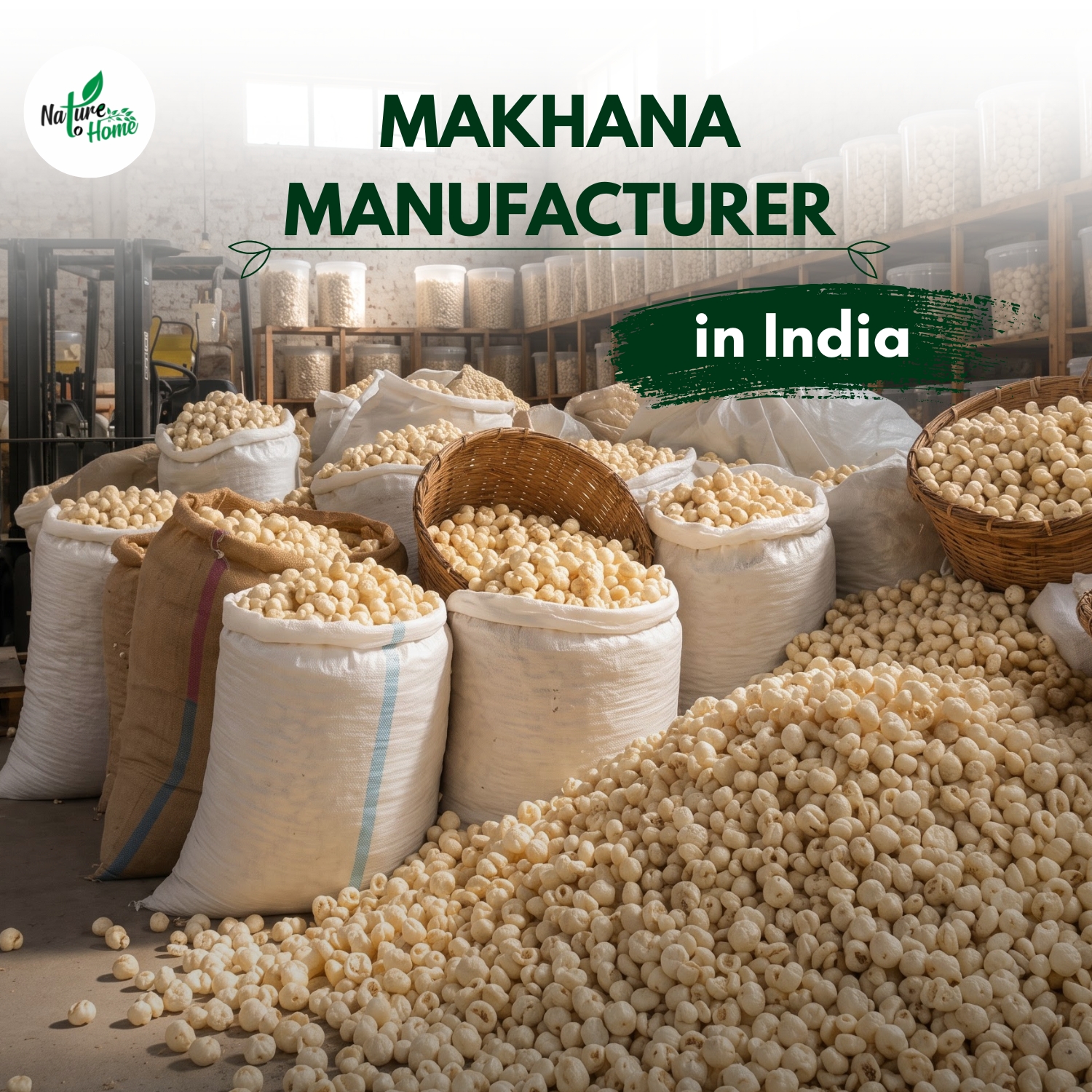
Behind every packet of finished makhana is a supply chain involving cultivation, harvesting, seed collection, processing, grading, packaging and distribution. Bulk makhana suppliers play an important role in connecting these stages with wholesalers, retailers, food manufacturers and distributors.
However, bulk makhana trading is not simply a matter of purchasing large quantities and reselling them. Understanding the product's origin, processing methods, quality grades and storage requirements is essential for maintaining consistency throughout the supply chain.
1. Bihar: The Major Centre of Makhana Production
Bihar is the leading makhana-producing state in India. Its waterlogged agricultural landscapes, ponds, wetlands and lowland fields provide suitable conditions for the cultivation of makhana, scientifically known as Euryale ferox.
Important production districts include Darbhanga, Madhubani, Purnia, Katihar, Saharsa, Supaul, Araria, Kishanganj and Sitamarhi.
According to an APEDA-associated research report, Bihar accounts for approximately 85–90% of India's total makhana production. The state has therefore become the central hub of the country's makhana cultivation and processing industry.
Mithila Makhana received its Geographical Indication (GI) registration on 16 August 2022. This recognition identifies the product's geographical association and traditional identity. It also highlights the importance of preserving the agricultural knowledge and practices connected with the Mithila region.
The GI recognition is relevant to product identity and origin; it should not be interpreted as an automatic quality certification for every individual batch sold in the market.
2. Understanding Makhana Sourcing: Farmers, Traders and Aggregators
The sourcing of makhana involves several participants, each performing a different role in the supply chain.
Direct Sourcing from Farmers
Farmers are involved in cultivating makhana and harvesting its seeds from ponds, wetlands or cultivated fields. Direct sourcing can provide buyers with closer connections to the agricultural production stage.
However, purchasing directly from farmers does not necessarily mean that the product is ready for retail or wholesale distribution. Raw seeds require further processing before becoming the familiar white, expanded makhana consumed by customers.
Buyers interested in direct agricultural sourcing must understand harvesting, seed collection, drying, processing arrangements, transportation and quality requirements.
Local Traders and Aggregators
Local traders, aggregators and Farmer Producer Organisations (FPOs) can connect agricultural producers with larger buyers.
They may collect produce from multiple farmers, arrange transportation, coordinate processing and consolidate quantities according to market requirements.
This arrangement can be useful for businesses that need larger and more consistent supplies without independently managing every stage of agricultural procurement.
Processing Units and Wholesale Suppliers
Processing units handle operations that convert harvested seeds into marketable popped makhana. Wholesale suppliers may purchase processed or graded makhana and distribute it to retailers, manufacturers, distributors and other commercial buyers.
The distinction between a farmer, raw-seed trader, processor and bulk supplier is important. These participants may operate independently or perform multiple functions within the same business.
3. From Harvesting to Popped Makhana: Understanding the Processing Journey
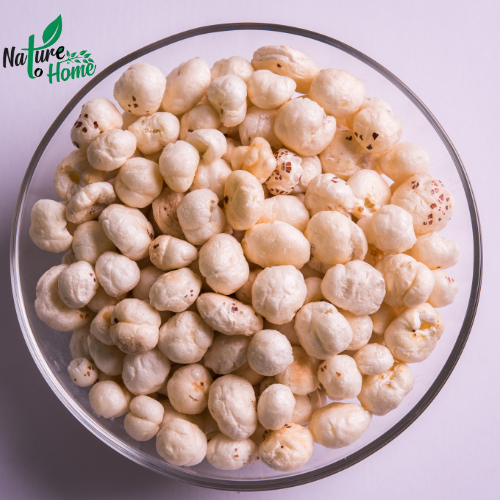
The transformation of makhana seeds into the white, expanded product involves several stages.
Harvesting and Seed Collection
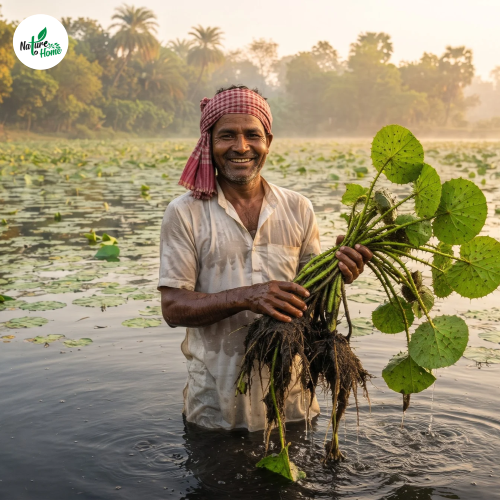
Makhana is an aquatic crop that grows in ponds, wetlands and suitable lowland agricultural fields.
In traditional pond-based cultivation, harvesting involves collecting mature seeds from underwater conditions. This work requires specialised knowledge and considerable physical effort.
The traditional harvesting process has historically involved workers from the Mallah community, whose experience in aquatic environments has played an important role in the cultivation and harvesting of makhana.
Cleaning and Drying
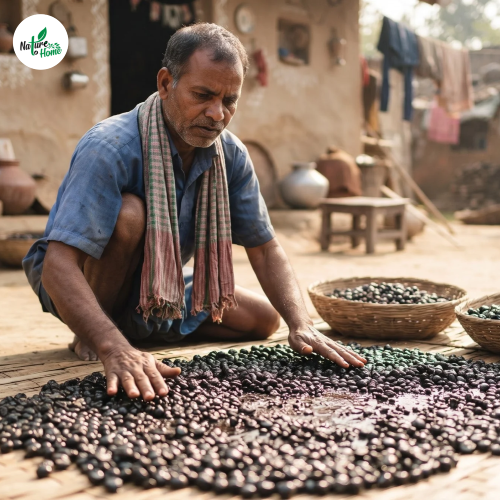
After collection, the seeds undergo cleaning to remove unwanted materials and impurities.
Drying is another important stage because the condition of the seeds influences subsequent roasting and popping operations. Appropriate drying and handling help prepare the seeds for further processing.
Roasting and Popping
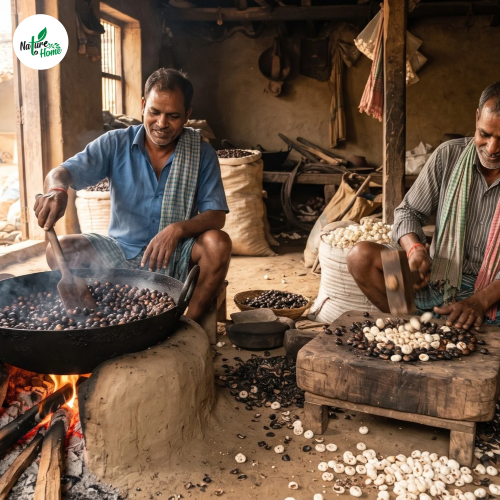
One of the most specialised stages of makhana processing is the conversion of hard seeds into expanded white kernels.
Traditionally, the seeds are roasted at high temperatures and subsequently processed through a controlled popping operation. Skilled workers known as Phodis or traditional makhana processors have played an important role in this process.
The timing, temperature and handling of the seeds influence the final expansion, appearance and quality of the popped product.
Traditional processing requires considerable experience because improper roasting or popping can affect the size, shape and overall appearance of the finished makhana.
Modern processing equipment is also being introduced to improve efficiency, reduce manual effort and support more standardised production.
Grading and Sorting
After popping, makhana is separated according to size, appearance and quality.
Grading is commercially important because different buyers have different product requirements. Larger and more uniform pieces are generally preferred for certain premium retail applications, while smaller grades and broken pieces may be suitable for other food processing requirements.
The grading stage helps buyers identify the product specifications before purchasing in bulk.
4. Understanding Makhana Grades and Suta Classification
In the wholesale market, makhana is commonly discussed in terms of size and grade. Suta is a traditional trade measurement used to classify the size of popped makhana.
Different suppliers may use their own grading specifications, so buyers should confirm the actual size range and grading method before placing an order.
Common commercial descriptions include:
- 4 Suta Makhana
- 5 Suta Makhana
- 6 Suta Makhana
- Handpicked Makhana
- Medium-Grade Makhana
- Small-Grade Makhana
- Mura or Broken Makhana
Larger and more uniform pieces are often selected for premium presentation and retail packaging. Smaller pieces and broken makhana may be used by food processors, snack manufacturers and businesses producing value-added food products.
An important consideration in bulk purchasing is grade consistency. A product described as a particular Suta grade should be evaluated through physical samples and measurable specifications rather than relying entirely on its commercial name.
5. Seasonal Harvesting and Year-Round Market Availability
Makhana cultivation follows an agricultural cycle, but the commercial availability of processed makhana is not limited to the harvesting season.
The APEDA-associated study's crop calendar identifies August, September and October as the principal harvesting months in the traditional Bihar production cycle. Other agricultural activities, including transplantation, flowering and fruit development, take place during earlier months.
Once harvested and processed, popped makhana can be stored for subsequent distribution when suitable packaging and storage conditions are maintained.
This allows traders, processors and wholesale suppliers to maintain inventory beyond the main harvesting period.
However, year-round availability does not mean that supply, quality and prices remain unchanged throughout the year. Procurement costs, inventory levels, transportation, grade availability and market demand can influence commercial prices.
6. How the Bulk Makhana Supply Chain Works
The wholesale supply chain connects agricultural production with the businesses that distribute or process the finished product.
A simplified supply chain can be understood through the following stages:
Cultivation → Harvesting → Seed Collection → Cleaning and Drying → Roasting and Popping → Grading and Sorting → Bulk Packaging → Transportation → Wholesale Distribution
Each stage adds value to the product and influences its final commercial condition.
For example, agricultural producers focus on cultivation and harvesting, processors convert the seeds into popped makhana, graders separate different sizes, and suppliers coordinate bulk procurement and distribution.
The APEDA-associated research report also documents the role of transportation, packaging and export logistics in connecting Bihar's production centres with domestic and international markets.
This makes the bulk supply chain an important part of the overall makhana industry.
7. What Wholesale Buyers Look for in Bulk Makhana
Wholesale buyers generally evaluate more than the quoted purchase price. They need to understand the actual specifications and condition of the product being offered.
Product Grade and Size Consistency
Buyers should confirm the grade, size distribution and acceptable variation within a batch. A representative sample can help establish whether the supplied product matches the agreed specifications.
Moisture and Storage Condition
Moisture management is important for preserving makhana's characteristic texture. Excess moisture can affect crispness, storage stability and product quality.
Buyers should consider moisture testing, suitable packaging and appropriate storage conditions when evaluating bulk consignments.
Cleanliness and Physical Condition
The product should be checked for dust, foreign particles, damaged pieces and other visible impurities.
A proper inspection helps buyers understand the condition of the consignment before accepting a commercial order.
Quantity and Supply Consistency
Different businesses have different purchasing requirements. Small retailers may need manageable quantities, while distributors and manufacturers may require larger and more frequent supplies.
Clear agreements regarding quantity, grade, packaging and delivery schedules can help maintain a more reliable purchasing relationship.
8. The Importance of Packaging and Storage in Wholesale Trade
Packaging is an important part of the makhana supply chain because the product can be affected by environmental moisture and unsuitable storage conditions.
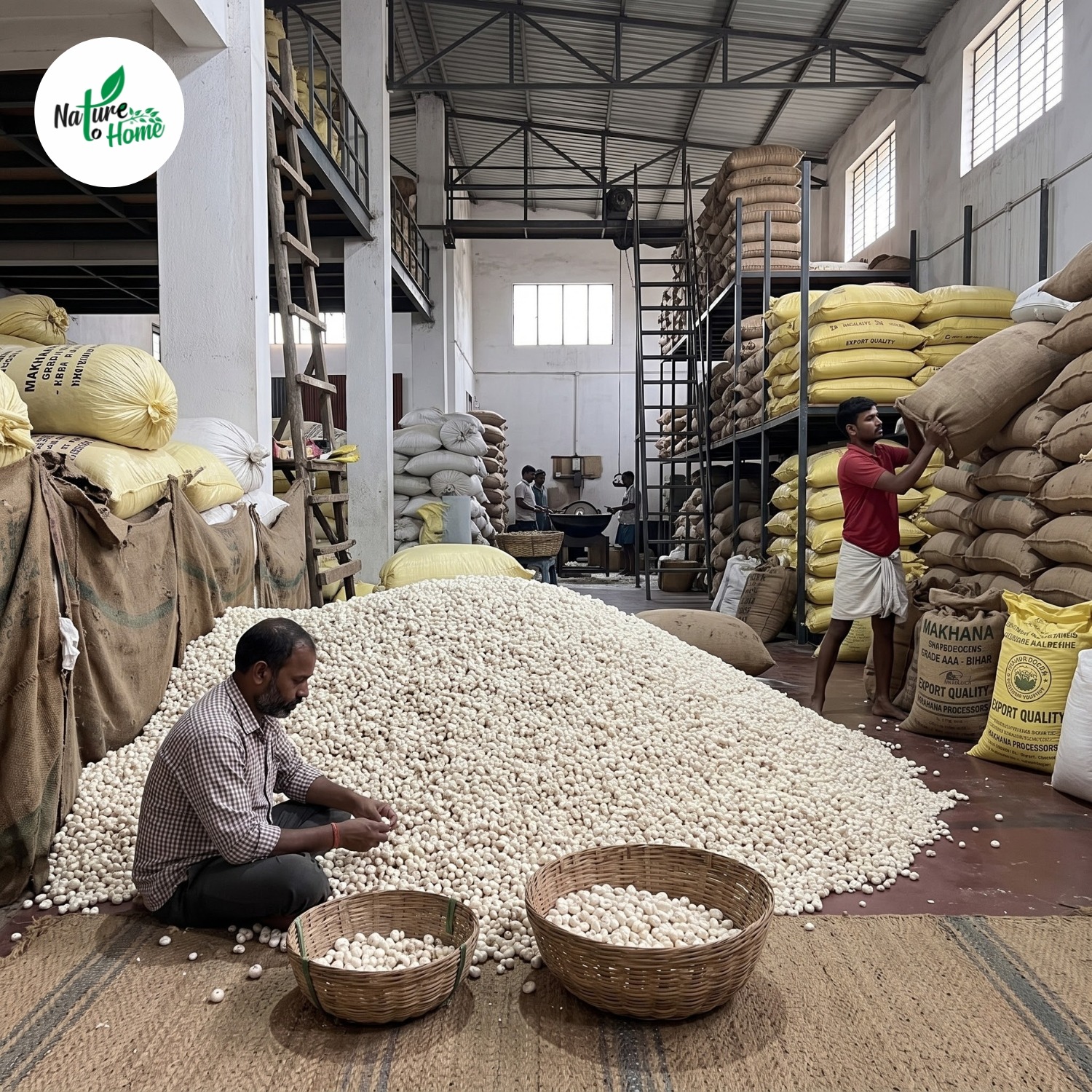
Bulk makhana is generally transported in larger bags or other suitable food-contact packaging, depending on the intended market and buyer requirements.
For commercial storage, important considerations include:
- Clean and dry storage areas.
- Protection from humidity and water exposure.
- Suitable food-grade packaging.
- Protection against dust and pests.
- Proper sealing of packaging.
- Protection from direct sunlight and rain.
- Appropriate inventory rotation.
For international shipments, packaging and labelling requirements become particularly important because products must remain protected throughout transportation and comply with the applicable destination-market regulations.
9. Challenges in the Makhana Wholesale Market
Despite its established agricultural and commercial importance, the makhana industry faces several operational challenges.
Traditional Processing Methods
Traditional popping is a skilled and labour-intensive activity. The process requires specialised experience, and variations in processing can influence the appearance and consistency of the finished product.
Quality Standardisation
Differences in grading methods and product specifications can create difficulties for buyers who expect consistent quality across multiple consignments.
A clearly defined grading system and better quality-testing facilities can help improve transparency in wholesale transactions.
Storage and Moisture Management
Improper storage can affect product condition and increase the risk of quality deterioration.
Maintaining appropriate packaging and storage practices is therefore important for processors, traders and bulk buyers.
Price Transparency
Makhana prices vary according to grade, size, quality, availability, processing costs, packaging and transportation.
There is no single price applicable to every grade and every commercial transaction. Buyers should compare quotations using the same product specifications and purchasing conditions.
Limited Value Addition at the Production Level
The value of makhana increases as it moves through processing, grading, packaging and distribution.
However, the distribution of income across different participants depends on the procurement and marketing arrangements. Strengthening the participation of agricultural producers and traditional processors in value addition remains an important industry consideration.
10. The Role of Traditional Processing Communities
Makhana production is not only an agricultural activity; it also represents a body of traditional knowledge developed over generations.
The Mallah community and skilled Phodis have historically contributed to harvesting and processing practices in North Bihar.
Their knowledge includes seed collection, drying, roasting and popping techniques that require practical experience.
An ICAR-published research study on the traditional knowledge of the Mallah community documents the physical challenges associated with underwater harvesting and traditional seed processing.
The development of modern processing machinery may improve efficiency, but preserving the skills and livelihood opportunities of traditional workers remains an important consideration for the industry's long-term development.
11. Modernisation and the Future of Makhana Processing
The makhana industry is gradually exploring improved cultivation techniques, processing equipment, grading systems and storage practices.
Mechanisation can support several stages, including cleaning, drying, grading, roasting, popping and packaging.
Research associated with ICAR-CIPHET has also contributed to the development of mechanised processing technologies intended to improve processing efficiency and reduce the physical difficulties associated with traditional operations.
Better equipment and standardised processing practices can help businesses improve product consistency and meet the requirements of larger domestic and international markets.
The development of processing infrastructure, farmer organisations and quality-control facilities will remain important for strengthening the sector.
12. Makhana's Position in the Indian and International Market
Makhana has moved beyond its traditional regional market and is now traded through different domestic and international business channels.
It is used in household food preparations, dry fruit retailing, packaged snacks and value-added food products.
The export supply chain requires additional attention to product specifications, food safety, packaging, documentation and destination-market regulations.
According to APEDA-associated research, Indian makhana exports reach markets including the United States, the United Kingdom, the Middle East and other international destinations.
The expansion of processing capacity, improved product standardisation and stronger supply-chain infrastructure can support the industry's ability to serve these markets.
Conclusion
The bulk makhana industry is built on a connected network of farmers, harvesters, traditional processors, traders, aggregators, wholesalers, distributors and food businesses.
Understanding this network is essential for anyone involved in the wholesale trade of makhana. The journey from an aquatic seed to a finished popped product involves specialised agricultural practices, traditional processing knowledge, careful grading and suitable storage.
As the industry develops, improving quality standardisation, strengthening processing infrastructure, maintaining transparent trade practices and supporting the communities involved in production will be important priorities.
The future of bulk makhana supply will depend not only on the availability of the product but also on the efficiency, transparency and reliability of the entire supply chain.






















Have Questions? Ask Us!
Need More Details About This Product?